Korean Bibimbap
Highlighted under: Inspired Kitchen
Korean Bibimbap is a colorful and nutritious dish that combines rice, vegetables, and protein, all topped with a fried egg and spicy gochujang sauce.
Korean Bibimbap is a traditional Korean dish that translates to 'mixed rice.' It is a vibrant and healthy meal packed with fresh vegetables, protein, and a spicy kick. This dish is not only visually appealing but also incredibly versatile, allowing you to customize it with your favorite ingredients.
Why You'll Love This Recipe
- A delightful mix of flavors and textures in every bite
- Customizable with your favorite vegetables and proteins
- A healthy and satisfying meal that is perfect for any occasion
The Origins of Bibimbap
Bibimbap, which translates to 'mixed rice' in Korean, is a traditional dish that has roots dating back to the Joseon Dynasty. It was originally served as a royal meal and has since evolved into a popular comfort food enjoyed by many. The dish beautifully represents Korean culinary traditions, showcasing the importance of balance and harmony through its colorful presentation and variety of ingredients.
Each component of bibimbap is thoughtfully prepared, from the fresh vegetables to the perfectly cooked rice. This combination not only offers a feast for the eyes but also provides a well-rounded meal that is both nutritious and satisfying. The dish is often served in a stone bowl, which adds to its appeal by allowing the rice to crisp slightly at the bottom, enhancing the overall texture.
Customizing Your Bibimbap
One of the best aspects of bibimbap is its versatility. You can easily tailor it to your preferences by selecting your favorite vegetables and protein sources. Whether you prefer protein-packed options like beef, chicken, or tofu, or wish to keep it entirely vegetarian, the possibilities are endless. Popular vegetables include mushrooms, radishes, and bell peppers, all of which can add unique flavors and textures to the dish.
Don't hesitate to experiment with different sauces and seasonings as well. While gochujang is a classic choice, you can also use ssamjang or even a drizzle of soy sauce for a different twist. This adaptability makes bibimbap not just a meal, but a canvas for culinary creativity!
Serving Suggestions
Bibimbap can be served as a standalone dish or alongside other Korean favorites. Consider pairing it with dishes like kimchi, a spicy fermented vegetable side, or a refreshing cucumber salad to balance the meal. For an authentic experience, serve it in a hot stone bowl, which will keep the dish warm and create a delightful crispy layer of rice on the bottom.
For those who enjoy a bit of heat, provide extra gochujang on the side, allowing diners to adjust the spice level according to their taste. This communal aspect of sharing and customizing your meal adds to the enjoyment and makes bibimbap a great option for gatherings and celebrations.
Ingredients
For the Bibimbap
- 2 cups cooked white rice
- 1 cup spinach, blanched
- 1 cup carrots, julienned
- 1 cup zucchini, julienned
- 1 cup bean sprouts, blanched
- 2 fried eggs
- 2 tablespoons sesame oil
- 2 tablespoons gochujang (Korean chili paste)
- 1 teaspoon sesame seeds
- Salt to taste
For Optional Protein
- 1 cup cooked beef, sliced thinly (or tofu for a vegetarian option)
- Marinade: 2 tablespoons soy sauce, 1 tablespoon sugar, 1 clove garlic, minced
Feel free to adjust the vegetables and protein based on your preferences!
Instructions
Prepare the Vegetables
Blanch the spinach and bean sprouts in boiling water for 1-2 minutes, then rinse under cold water. Julienne the carrots and zucchini.
Cook the Protein
If using beef, marinate it in soy sauce, sugar, and garlic for 15 minutes before cooking in a skillet over medium heat until browned.
Assemble the Bibimbap
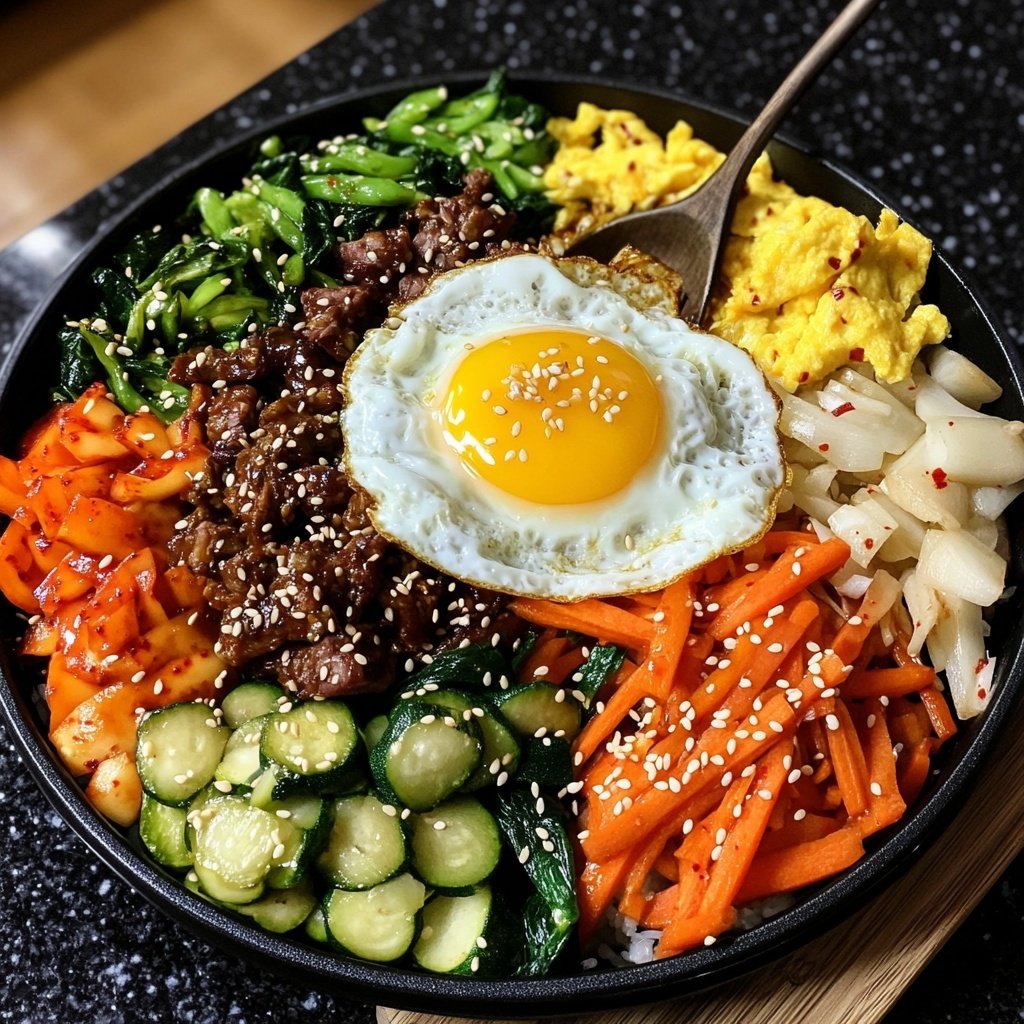
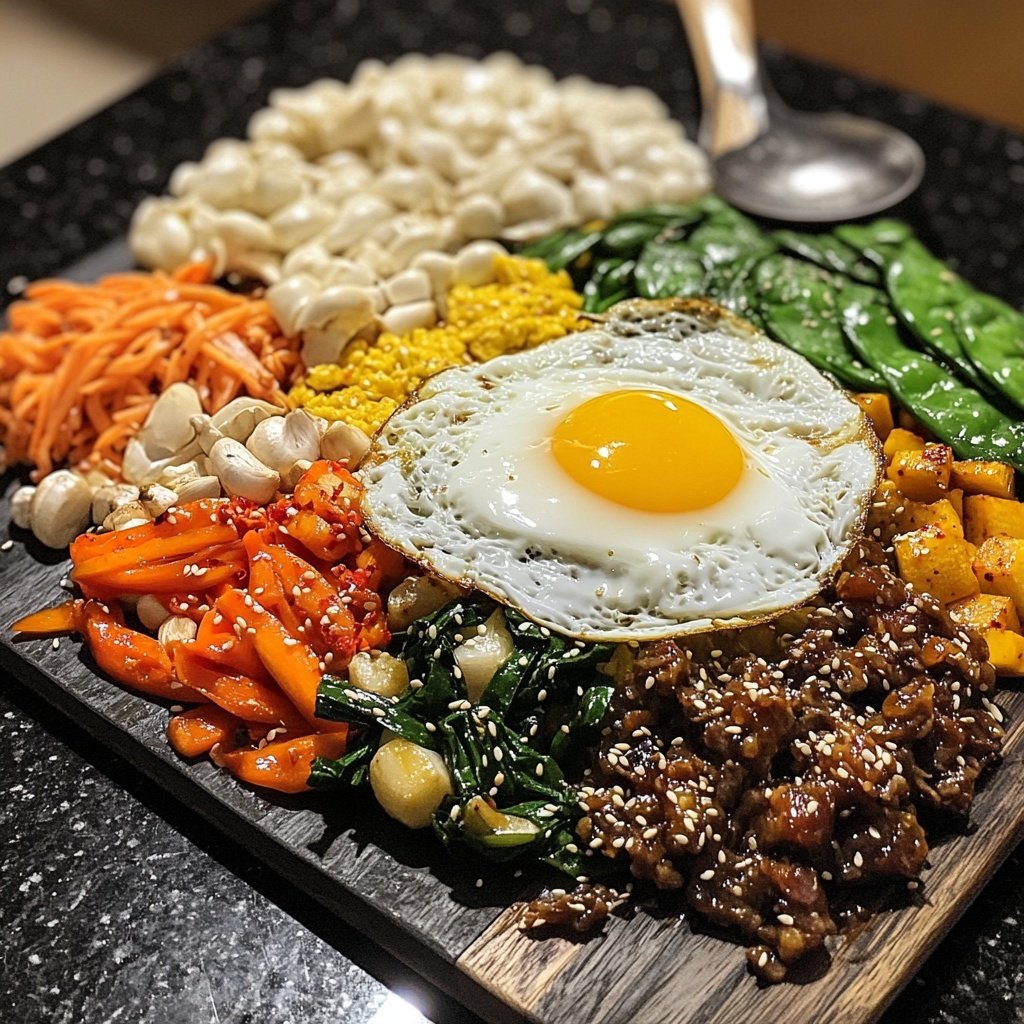
In a large bowl, place a serving of rice, then arrange the cooked vegetables, protein, and fried egg on top. Drizzle with sesame oil and gochujang. Sprinkle with sesame seeds and season with salt.
Mix everything together before enjoying for a delicious and hearty meal!
Pro Tips
- For a vegan option, substitute the egg with sliced avocado and use tofu as the protein.
Nutritional Benefits of Bibimbap
Korean bibimbap is not only delicious but also packed with nutrients. The dish offers a variety of vegetables, which are rich in vitamins and minerals, contributing to a balanced diet. Spinach provides iron and calcium, while carrots are high in beta-carotene, an essential nutrient for eye health.
Additionally, the use of healthy fats from sesame oil and the protein from eggs and meat or tofu help to keep you feeling full and satisfied. This combination makes bibimbap a wholesome choice for any meal, whether it's lunch, dinner, or even a hearty breakfast option.
Storing and Reheating Leftovers
If you find yourself with leftover bibimbap, storing it properly is crucial to maintain its flavor and texture. Place the components separately in airtight containers to keep the rice, vegetables, and protein fresh. When you're ready to enjoy your leftovers, reheat the rice in a microwave or on the stovetop, adding a splash of water to prevent it from drying out.
For the vegetables and protein, a quick stir-fry in a skillet can revive their flavors and textures. Just be cautious not to overcook them. With a little care, your leftover bibimbap can taste just as good as when it was freshly made!
Questions About Recipes
→ What can I use instead of gochujang?
You can substitute gochujang with sriracha or a mix of chili powder and soy sauce, but the flavor will differ.
→ Can I make bibimbap ahead of time?
Yes, you can prepare the ingredients in advance but it's best to assemble and serve right before eating.
→ Is bibimbap gluten-free?
Bibimbap can be made gluten-free by using gluten-free soy sauce and ensuring your gochujang is gluten-free.
→ What vegetables can I use for bibimbap?
You can use a variety of vegetables such as mushrooms, radish, or bell peppers based on your preference.
Korean Bibimbap
Created by: Vanessa Whitlock
Recipe Type: Inspired Kitchen
Skill Level: Intermediate
Final Quantity: 2 servings
What You'll Need
For the Bibimbap
- 2 cups cooked white rice
- 1 cup spinach, blanched
- 1 cup carrots, julienned
- 1 cup zucchini, julienned
- 1 cup bean sprouts, blanched
- 2 fried eggs
- 2 tablespoons sesame oil
- 2 tablespoons gochujang (Korean chili paste)
- 1 teaspoon sesame seeds
- Salt to taste
For Optional Protein
- 1 cup cooked beef, sliced thinly (or tofu for a vegetarian option)
- Marinade: 2 tablespoons soy sauce, 1 tablespoon sugar, 1 clove garlic, minced
How-To Steps
Blanch the spinach and bean sprouts in boiling water for 1-2 minutes, then rinse under cold water. Julienne the carrots and zucchini.
If using beef, marinate it in soy sauce, sugar, and garlic for 15 minutes before cooking in a skillet over medium heat until browned.
In a large bowl, place a serving of rice, then arrange the cooked vegetables, protein, and fried egg on top. Drizzle with sesame oil and gochujang. Sprinkle with sesame seeds and season with salt.
Extra Tips
- For a vegan option, substitute the egg with sliced avocado and use tofu as the protein.
Nutritional Breakdown (Per Serving)
- Calories: 600 kcal
- Total Fat: 20g
- Saturated Fat: 5g
- Cholesterol: 186mg
- Sodium: 600mg
- Total Carbohydrates: 80g
- Dietary Fiber: 7g
- Sugars: 5g
- Protein: 20g